A heritage fish shaped by mountain water
Arctic char is considered by many to be the original freshwater fish species. It is believed to be the first species that migrated into the country after the ice retreated approximately 10,000 years ago. Arctic char grows slowly in the cold, clear water. Its skin is very shiny, influenced by water quality. The clearer the water, the shinier the fish. The natural conditions, combined with good animal husbandry and careful monitoring, give the fish the characteristic quality and delicate flavour it is known for.
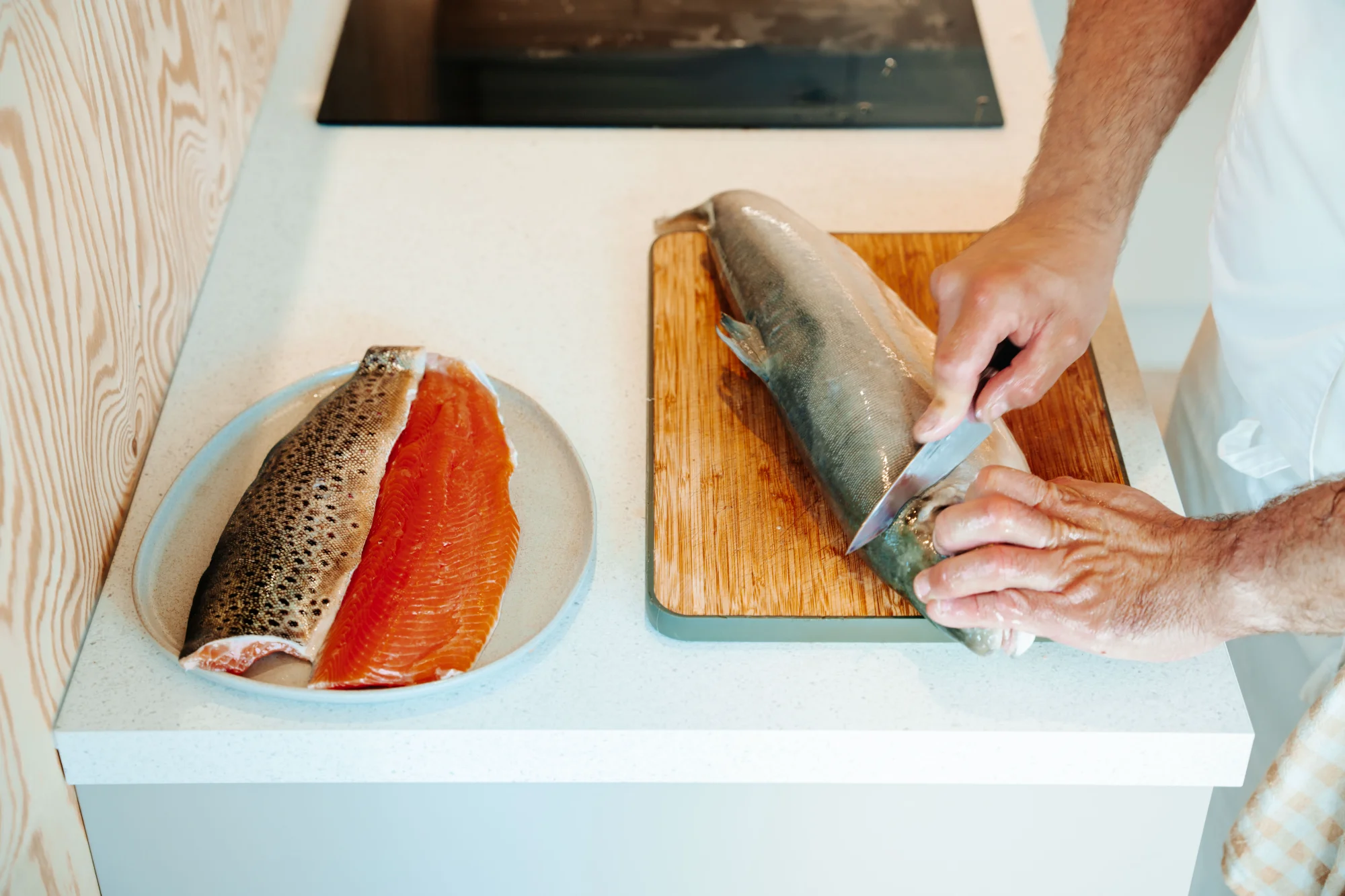
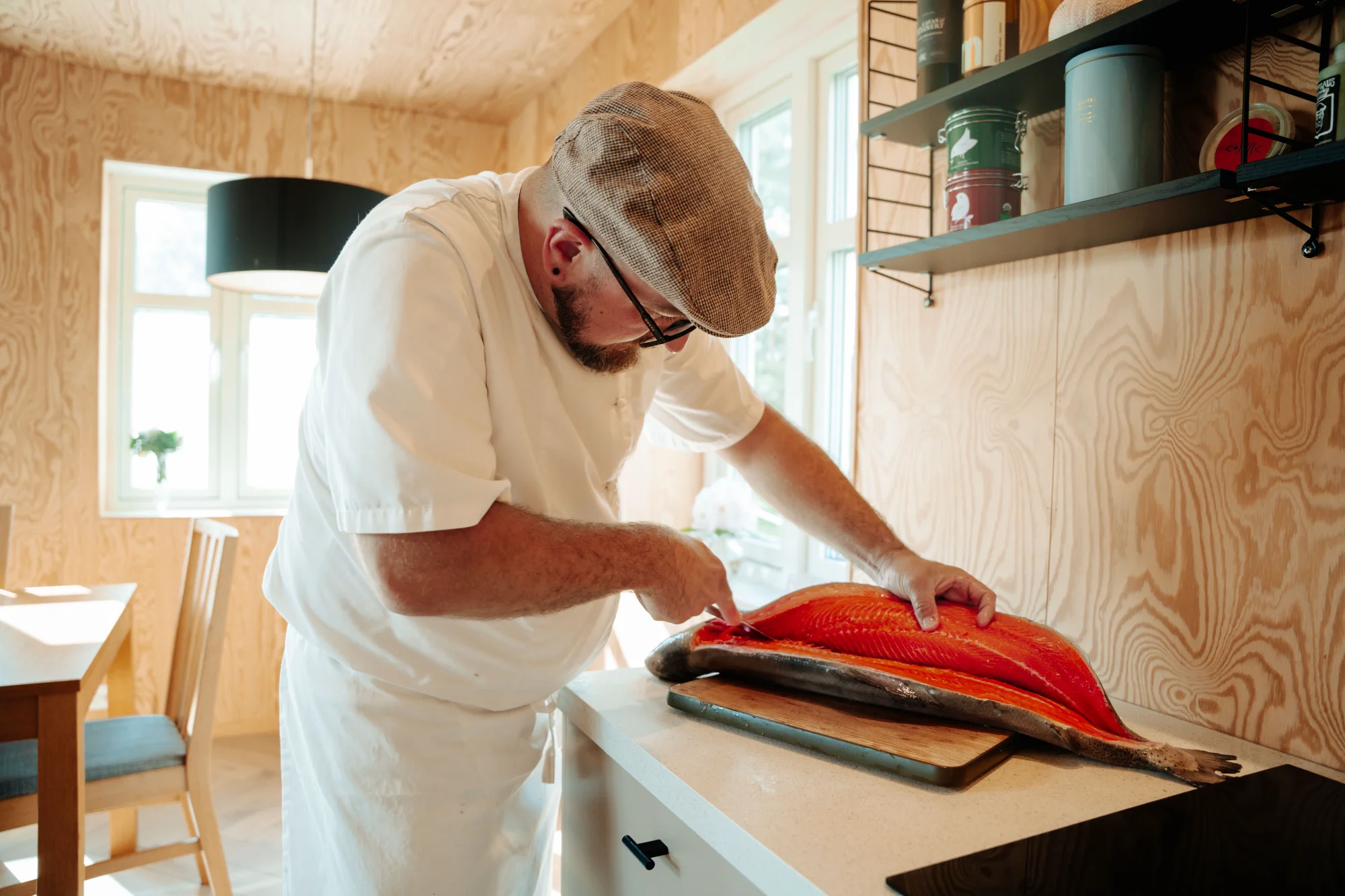
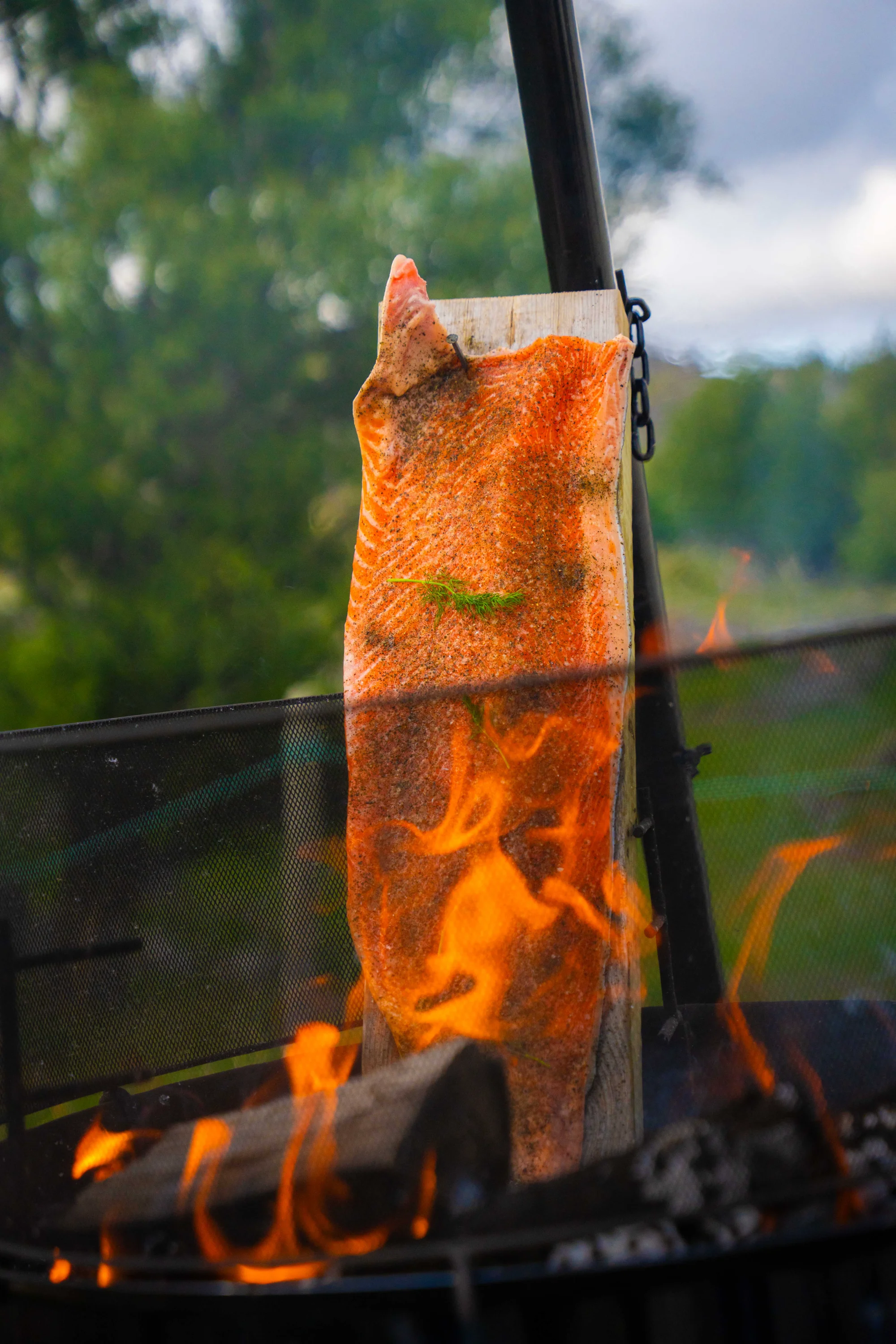
With its fine texture and mild flavour, Arctic char is a versatile ingredient. It can be pan-fried, baked, grilled, smoked or served raw – and often needs no more than simple accompaniments to shine.
The story behind the red colour
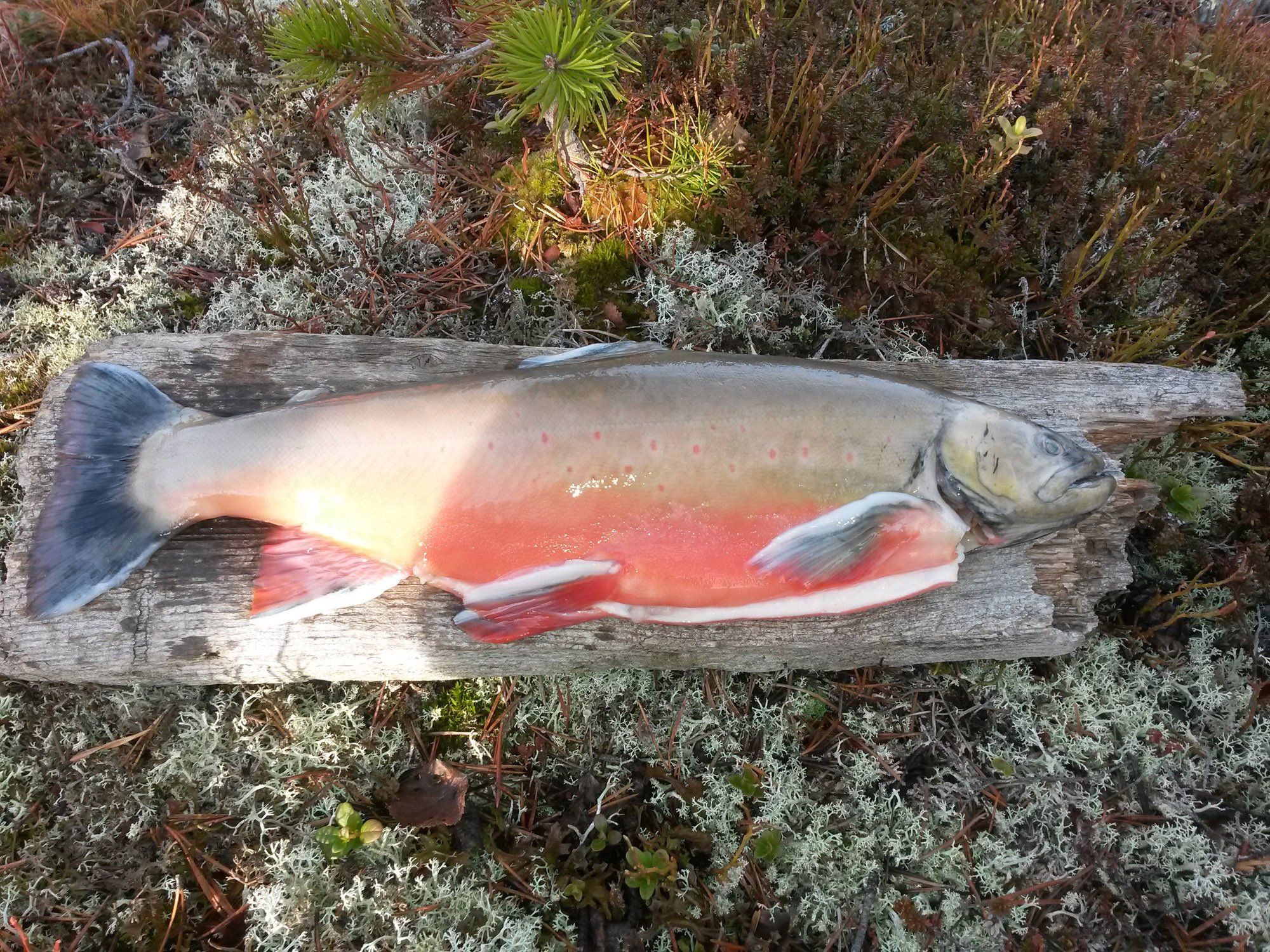
What many associate with Arctic char are the characteristic colours: a red-orange belly and fins with touches of red, white and black. However, this is the char's "festive attire", which appears during the spawning season. The colours are particularly vivid in the male fish, and the more intense the colouring, the more attractive it is to females. At the same time, the male changes body shape: it becomes narrower across the back and taller in the body. This makes it look larger and more impressive – both to females and competing males.
With our fish, we aim to prevent this process from beginning. The vivid colours are a sign of sexual maturity, which also causes the quality of the fish to gradually diminish. Therefore, the Arctic char is harvested before it reaches this stage, when quality is at its peak and the fillet has developed its fine red colour.
A pure and natural product
Through technological innovation, stricter regulations and a focus on resource efficiency, mountain lake fish farming can contribute to a more sustainable future for both food production and the environment. In the regulated waterway in Sirdalen, renewable energy has already been produced before the water is used again for trout production.