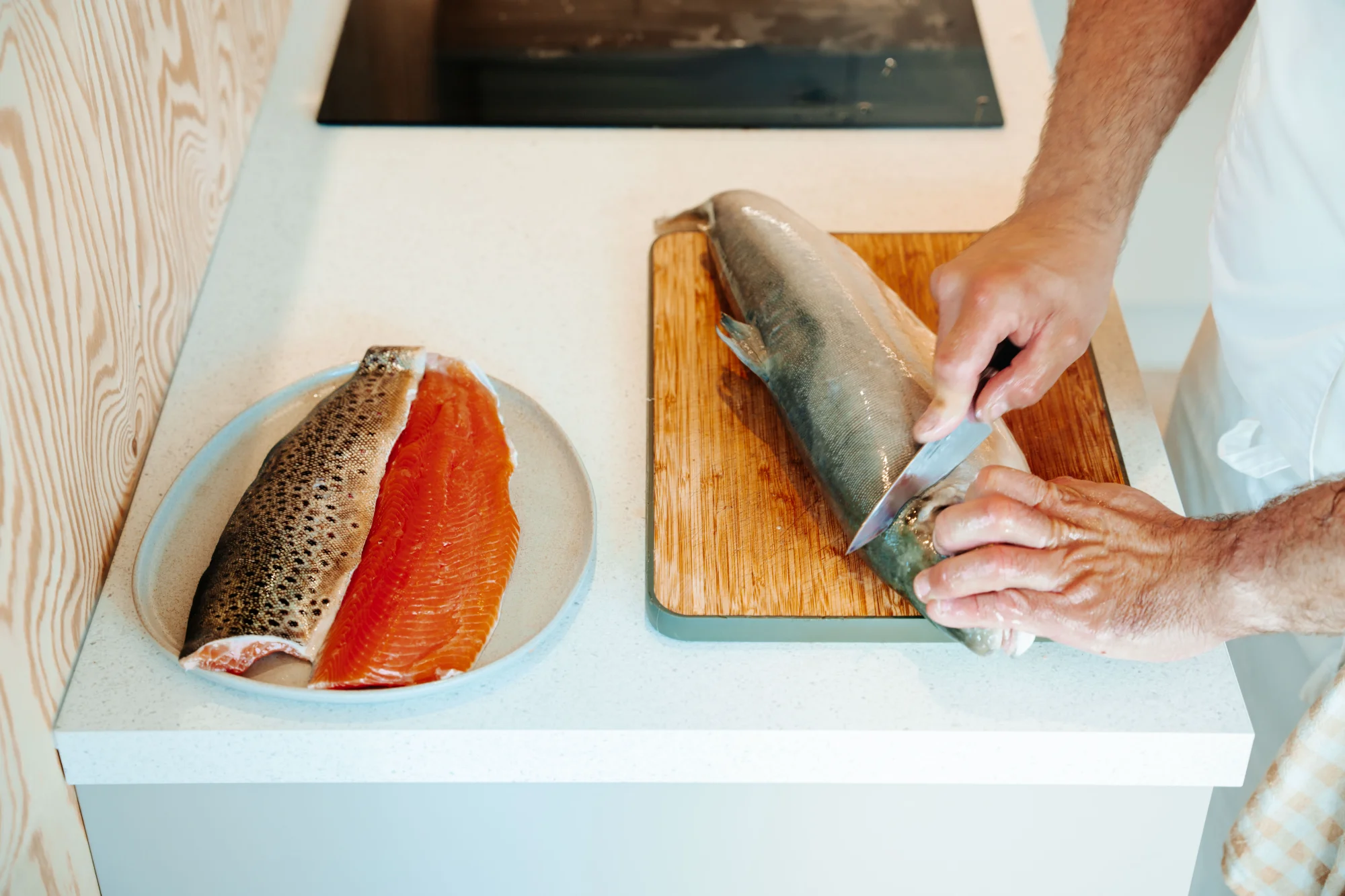
The trout is adapted to life in mountain water
Mountain trout have swum in our mountain lakes since the last Ice Age. The cold mountain water causes the fish to grow more slowly, resulting in firm texture and a unique quality. The low water temperatures give the trout time to develop at its own pace. Together with good living conditions and close monitoring throughout the entire production, this forms the foundation for high-quality mountain trout. The fish has firm texture and a unique quality.
Mountain trout is known for its adaptability. It varies in colour depending on water quality and habitat, and often has a lighter belly, dark back and reddish or orange spots along its sides. The colour of the flesh varies from light pink to darker red tones, depending on diet and environment. It can vary in size, but typically weighs between 300 grams and a couple of kilograms, depending on living conditions.
Part of the Nordic food tradition
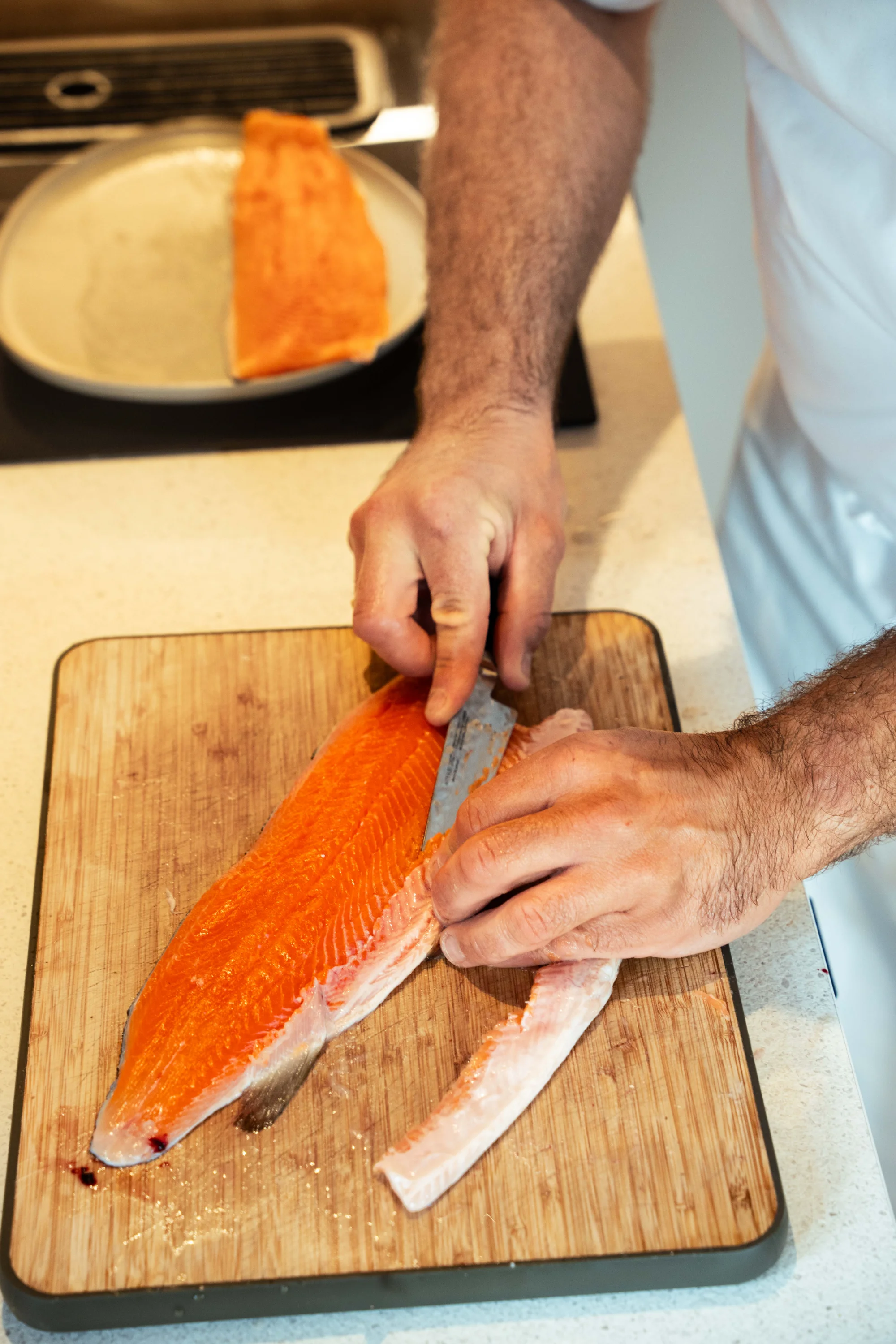
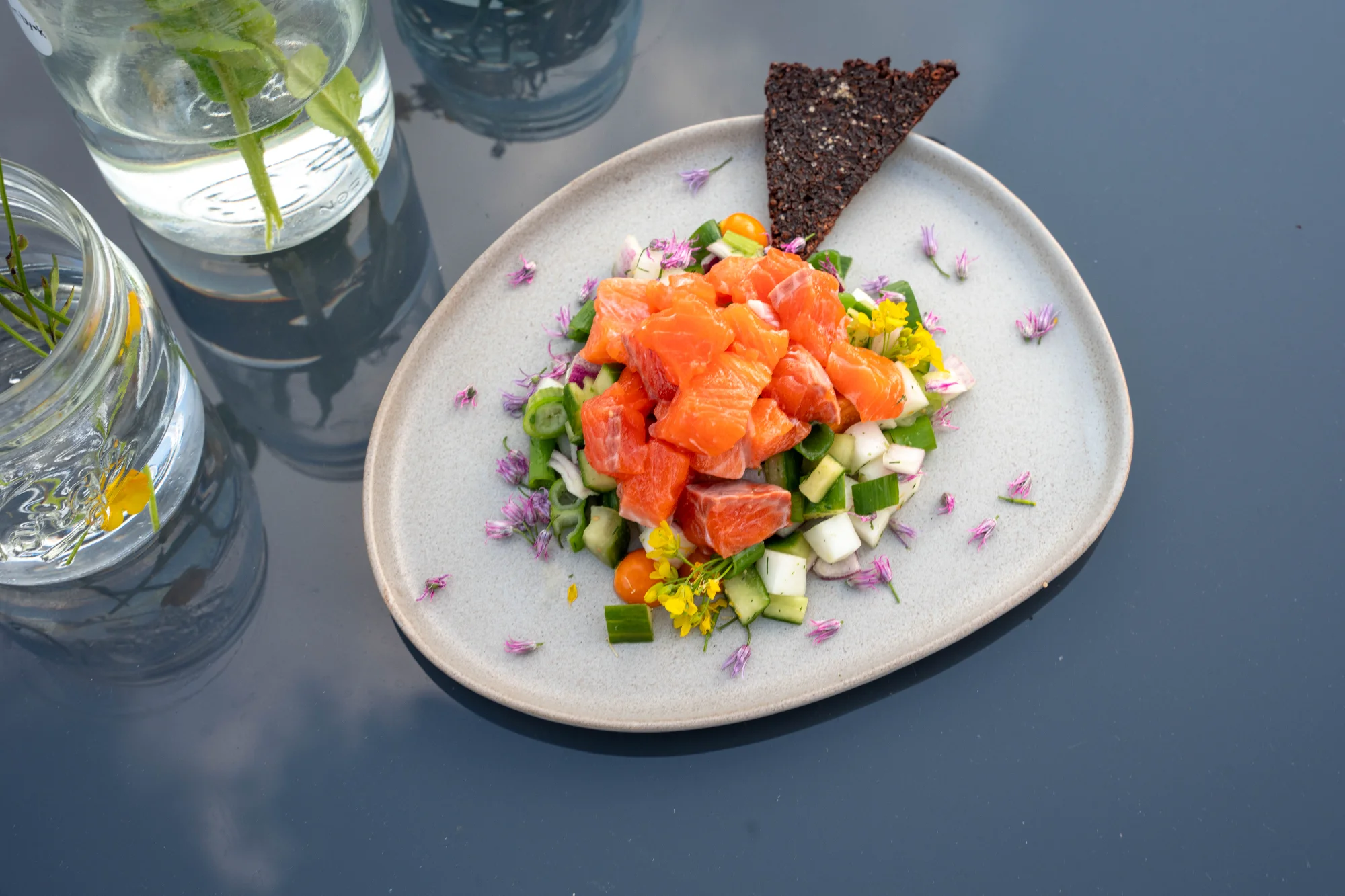
Trout is a versatile ingredient that can be pan-fried, baked, grilled or served raw. It pairs equally well with simple, fresh flavours as with more complex dishes – and makes it easy to serve a good fish meal. The fish is also known to be a healthy choice, rich in proteins, omega-3 fatty acids and important nutrients.
Mountain trout has long been a favourite among food enthusiasts. It is associated with clean mountain lakes, fresh air and traditional culinary experiences. Now the same quality is brought to market through controlled fish farms – ready to enjoy, wherever you are.
A pure and natural product
Through technological innovation, stricter regulations and a focus on resource efficiency, mountain lake fish farming can contribute to a more sustainable future for both food production and the environment. In the regulated waterway in Sirdalen, renewable energy has already been produced before the water is used again for trout production.